Growth
Uneven growth across groups over time
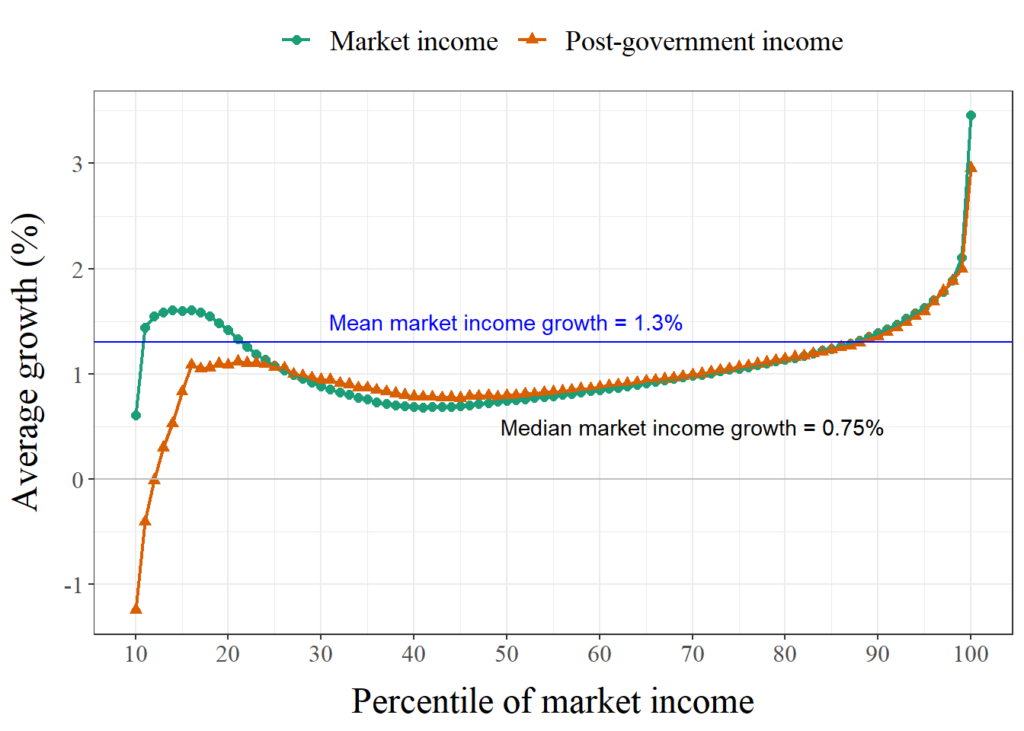
Published figure result: higher growth at the bottom and top of the distribution, with stagnation in the middle.
The lab's empirical work depends on administrative records, household surveys, macroeconomic aggregates, and official reference databases relevant to Australian fiscal policy.
The goal of this page is to clarify the evidence base behind the lab's modelling and empirical analysis.
Research in macro public finance depends on combining detailed household-level information with broader macroeconomic and institutional data. The lab uses these sources to discipline structural models, document heterogeneity, and evaluate policy counterfactuals.
Some sources are public and easy to access, while others involve formal data arrangements through the relevant institutions. This page therefore functions as a data map rather than a repository.
Used to study earnings, taxes, transfer interactions, and long-run distributional patterns.
Used to capture demographic, labour-market, and lifecycle variation not visible in aggregate statistics alone.
Used for calibration, benchmarking, and the interpretation of fiscal aggregates and broader economic trends.
Published figure result: higher growth at the bottom and top of the distribution, with stagnation in the middle.
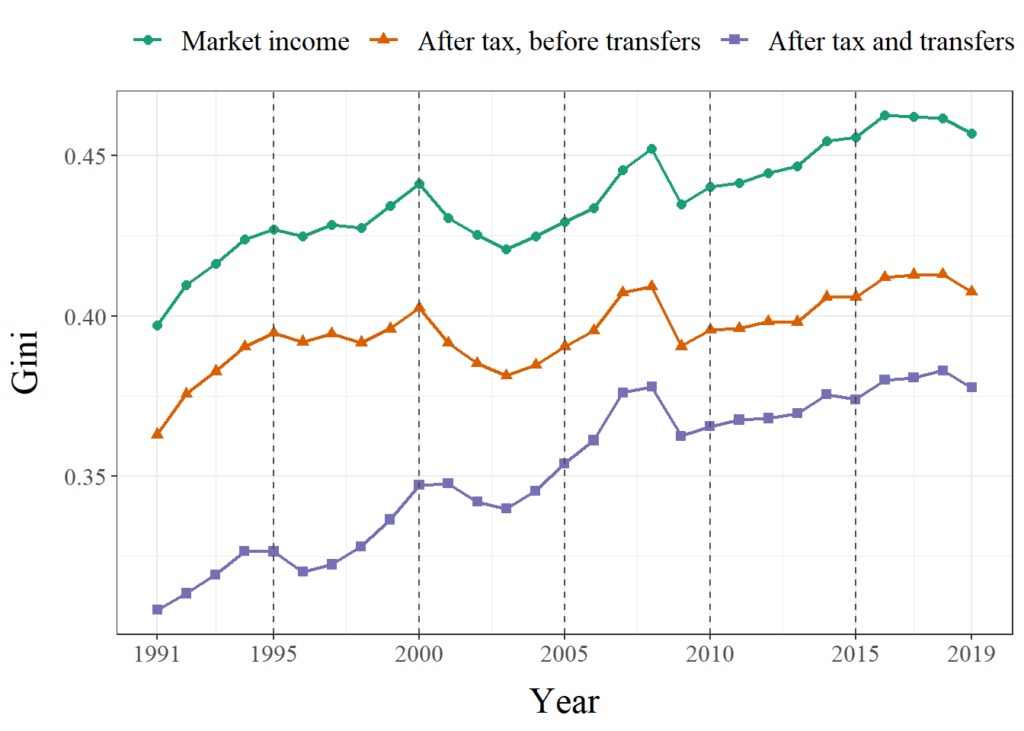
Published figure result: the Gini rises over time, and the P90/P50 ratio shows a widening gap between the top and the middle.
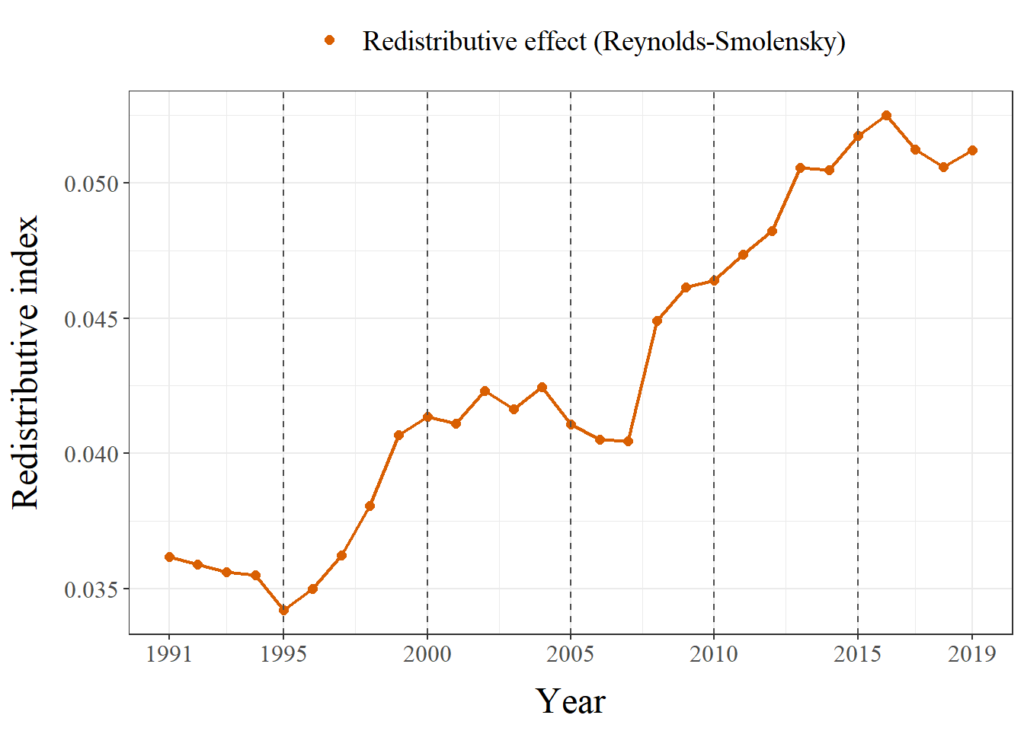
Published figure result: the personal income tax system becomes more redistributive, while the redistributive index for transfers declines slightly over the period.
Published figure result: the transfer system is very progressive, but the average size of transfers declines slightly over the sample period.

These are the main empirical inputs named in the current site materials.
Longitudinal administrative information on earnings, taxes paid, and related variables used to study distributional dynamics and fiscal design.
The Household, Income and Labour Dynamics in Australia survey provides rich longitudinal information on labour, demographics, and household behaviour.
Australian Bureau of Statistics data are used for macroeconomic calibration, benchmarking, and the interpretation of aggregate fiscal outcomes.
Health expenditure and claims information supports the lab's work on insurance design, medical spending, and health-related inequality.
These sources help inform work on retirement savings, superannuation balances, and pension-system analysis.
Comparative international statistics support cross-country benchmarking and broader discussion of fiscal-system design.
Rather than freezing potentially dated point estimates into the page, this section highlights the empirical dimensions central to the lab's work.
The lab studies how statutory policy interacts with withdrawal rules and household circumstances to shape incentives and redistribution.
Research tracks retirement savings, pension design, and the long-run fiscal implications of population ageing.
Distributional outcomes are studied across the lifecycle, across families, and across generations using microdata and structural models.
The lab also examines the relation between health shocks, insurance design, savings behaviour, and wealth inequality.
The redesigned page now gives a cleaner overview of empirical sources. If you want, the next step can be a more technical data catalogue organised by project or research theme.